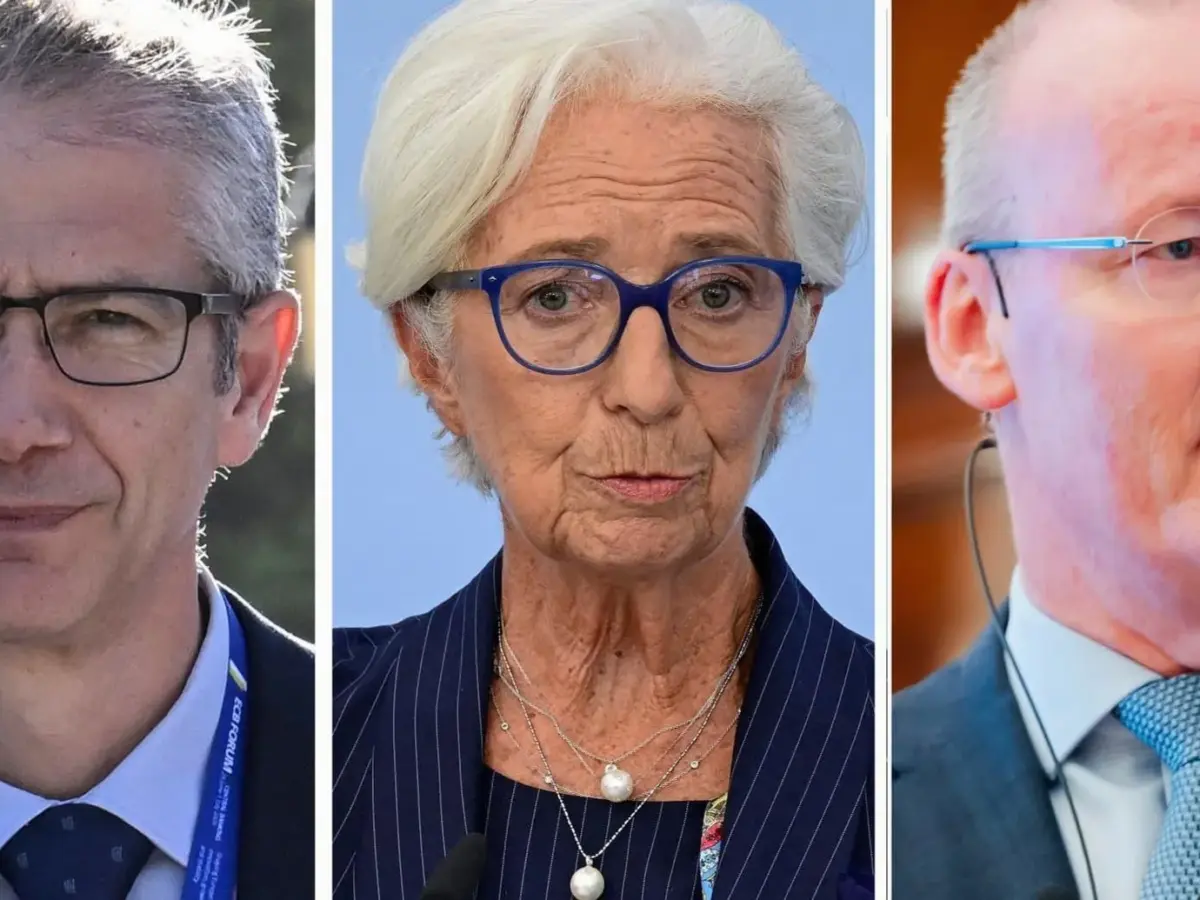
Christine Lagarde has announced she will step down as president of the European Central Bank on February 7, departing nearly nine months before her official term ends in October 2027. Her exit triggers an immediate and high stakes succession race that arrives at a volatile moment for the eurozone. Since taking the helm in 2019, Lagarde has navigated the institution through some of its most turbulent waters, including the economic fallout of the Covid 19 pandemic, the invasion of Ukraine, and a historic inflation surge that ended years of negative interest rates.
The search for her replacement is expected to be a complex exercise in political horse trading among EU member states. Two primary contenders have already emerged: Spain’s Pablo Hernandez de Cos and the Netherlands’ Klaas Knot. While both possess deep monetary expertise, they represent different philosophies. Knot is viewed as a hawk who believes in aggressive action against inflation, whereas De Cos is seen as a candidate for continuity with a sharper focus on financial stability. This distinction is particularly critical as investors weigh how a new leader might handle France’s escalating sovereign debt crisis and upcoming elections.
Beyond the presidency, the ECB is facing a broader leadership transition as chief economist Philip Lane and executive board member Isabel Schnabel are also slated to leave next year. This vacuum comes at a time when market analysts warn that the bank must remain disciplined; there is significant concern regarding whether the ECB can maintain independence if pressured to bail out French fiscal instability. Some experts suggest Knot’s experience with global financial stability boards gives him an edge, while others argue De Cos would provide more comfort to rattled bond markets.
As she prepares to leave, Lagarde reflects on a trailblazing career that saw her become the first female finance minister of a G7 nation and the first woman to lead the International Monetary Fund. Despite receiving a warm send off from her colleagues and praise from European Council President Antonio Costa for her steady hand, her tenure was not without friction, highlighted by internal staff criticism toward the end of her term. For now, however, the spotlight shifts from Lagarde’s legacy to whoever will steer Europe through its next financial storm.